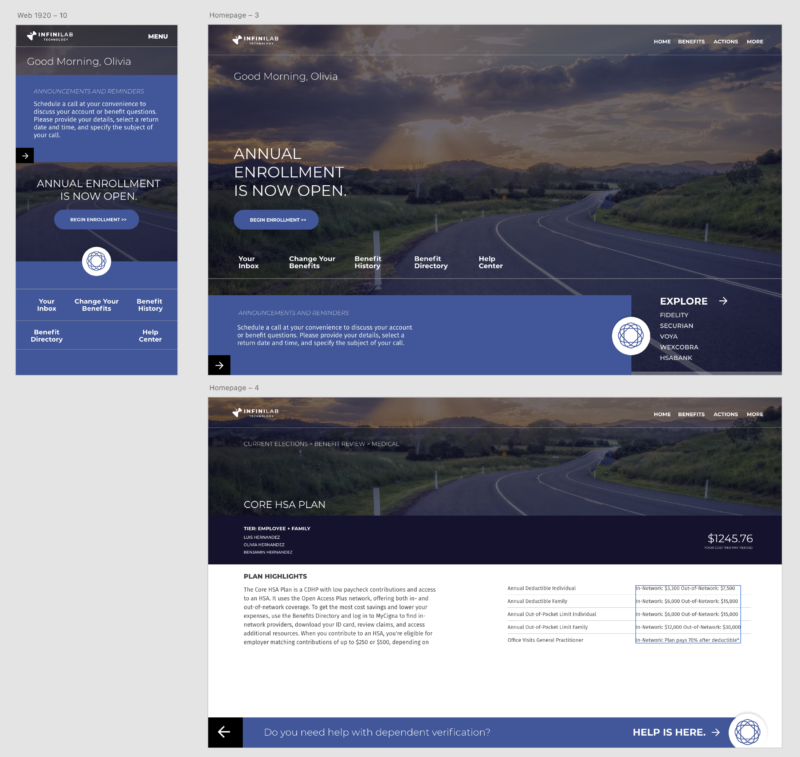
Tagline: “Do first. Learn as you go.”
Overview: This is the future-state vision of the exploration. It focuses on actions, not options. Each participant sees what matters now: pending tasks, decisions, and opportunities. The experience is timely, relevant, and personal.
Design rationale: It is informed by BJ Fogg’s Behavior Model, Nir Eyal’s Hook Model, and IDEO’s Human-Centered Design. Motivation, ability, and trigger are the levers of engagement. It follows the way Apple Fitness+ and Netflix’s adaptive home screen prioritize immediacy and relevance.
Market parallels: Netflix, with personalized surfaces. Duolingo, with action-driven progression and habit reinforcement. Google Pay and Apple Wallet, with task-oriented hierarchy and immediate access to primary actions.
Strengths:
- Hyper-personalized to each participant
- Prioritizes engagement through relevance and timing
- Reduces decision fatigue and speeds task completion
- Encourages follow-through
Risks and limitations:
- Depends heavily on accurate, integrated data
- A narrow action focus may limit exploration for some users
- Needs governance for personalization logic and privacy compliance
Strategic position: This concept is Empyrean’s destination: a proactive, contextual, human benefits experience where technology, design, and behavioral science meet. It guides participants instead of instructing them.